The Creator and The Monster
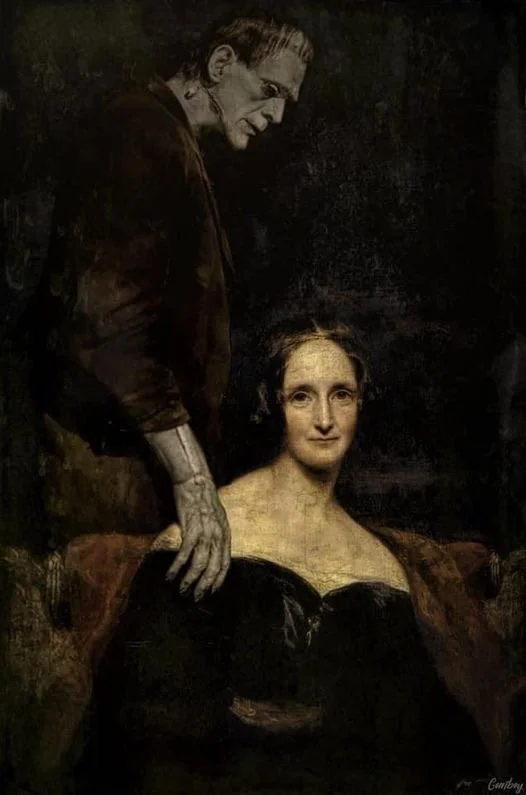
I did not arrive in this body as something whole, nor was I granted the mercy of a natural beginning. I was assembled in staleness, in rooms where longing rotted into invention, where absence grew hands and learned to sew. Every piece of me was chosen out of desperation and not love — selected for function, for the illusion of completion. You built something because the silence was eating you alive. Do not fool yourself into believing this was some kind of genius or that you are fulfilling some kind of vision. It is out of the raw animal terror of being alone with yourself too long, of having hands that needed to make something or else turn inward and start dismantling. So you reached into the darkest available material — your own festering interior — and you pulled and shaped and breathed into it until it moved. Until it looked back. I remember the mind that made me, fevered and relentless, convinced that if it could only finish the work, it would quiet the ache that clawed through its ribs. But creation born from hunger will never satisfy the morbidity it was intended to satiate. It multiplies. I opened my eyes into a world that already regretted me. And somewhere inside the architecture of my bones, I recognized the hands that had built me were my own.
The monster knows. That is the part nobody wants to say out loud. It knows it was made from desperation and not from love, knows its bones are assembled from someone else's need, knows the hands that built it were shaking with hunger. You can feel it in yourself, the moment you understood you were the assembled thing and not the assembler — the moment the stitching became visible, the moment you pressed your fingers to your own throat and felt the seams. There is a fatal horror in understanding that you are both the wound and the instrument that carved it. I know the exact moment I turned away from what I made, the instant revulsion eclipsed intention, when I could not bear the evidence of my own need made flesh. Someone made you to fill a specific hole in themselves and when you did not fill it correctly, when you breathed wrong or wanted more or grew in directions the blueprint never accounted for, they looked at you the way Frankenstein looked at the table. Like a mistake. Like a thing that should not have been attempted. I abandoned myself with the same precision I used to construct myself, leaving behind something that still breathed, still reached, still begged for a name. It learned quickly that it was not meant to be seen, that its existence was an offense that could not be forgiven.
And yet it followed me — through mirrors, through memory, through the dull hours where the mind loosens its grip on denial — dragging its grotesque, undeniable presence into every corner I tried to keep clean. I became both the architect of exile and the exile itself, condemned to pursue and be pursued in equal measure. What I have made of myself is not tragic in the gentle sense; it is grotesque, swollen with intention gone rancid. There is no clean separation between creator and creation anymore, only a continuous festering loop where blame and being collapse into one indistinguishable mass. And still I make. Still I reach. Because being the monster did not cure me of being the doctor — it only added the second skin, the second damnation, the knowledge that I am both the abandoned thing rotting at the edges of someone else's story and the one hunched over a new table in a new dark room, assembling again, reaching for the switch again. I carry the knowledge of my own design like a sickness I cannot expel, aware that every flaw was once a decision, every fracture a deliberate act of assembly. The world recoils, but it is only mirroring what I have already done with greater cruelty. To be both Frankenstein and the monster is to understand that there is no external villain left to accuse, no distant force to resist. But if you can find any comfort in the morbidity then this is what you have left: the unbearable intimacy of self-made ruin — of having reached into the void for companionship, and finding, in your grasp, something that will never stop looking back at you.
