The Architect of Undergrowth
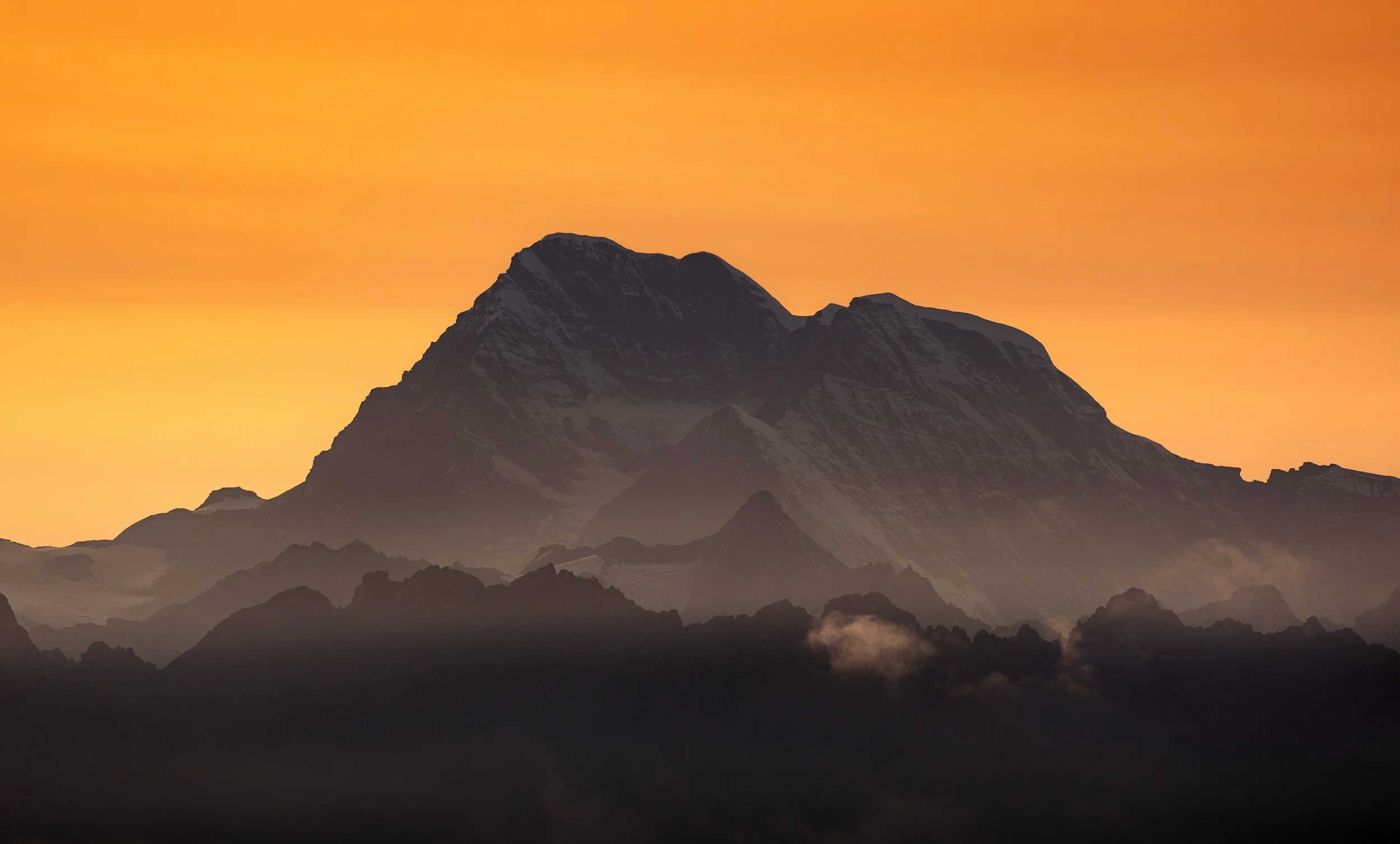
Sat underneath the sun I waited to feel the calmness wash over me, to grow as the plants do when their conditions are right. That is what nature does and I must as well, right? The feeling never came, and naturally, I stayed there as if I too were rooted. I was so sure that if I sat there and did everything I was told, watered myself before others, took my daily intake of sun, I would grow towards the sun.
How discouraged I was to find that though I had listened, followed the instructions, and tried everything to grow, I merely started to incline towards the soil, to sink into it with all of the weight I have been carrying around without ever having noticed it.
I faced away from the sun and into the coolness of the earth.
And I cried from the deepest parts of me, of my heart, my sorrow, and the pain I had grown comforted by.
Then I felt my arms sink into a muddy field, as the tears threatened to suffocate and drown me, I let it.
I sank into it, slumped and tired, for what else was I to do. I let myself go into the earth that had first made this very body and I thought, that would not be such a foul thing to do.
After all this too would be a rebirth, even if I was only the catalyst, I could leave a field of well watered flowers in the wake of my absence. The lower I went, I felt the dirt enclosing my ears, I was in a permanent silence. Even the stillest moments and the softest nights could not compare to how quiet it was then.
At first it was almost gentle. The weight above me rested without cruelty, pressing slowly against the bones of my shoulders, settling into the hollows of my throat. My breathing shortened in quiet increments. The air that reached me arrived tired and thin, as if it had traveled a long distance only to find there was nothing left worth saving below the surface.
I stayed there.
There is a particular fatigue that lives beneath grief, beneath anxiety, beneath every frantic attempt to save oneself. It is not dramatic. It does not shout. It simply loosens the will that once held a body upright. That fatigue wrapped itself around my ribs and drew them inward until even the act of hope felt like lifting stones.
I tried to remember the version of myself that believed growth was inevitable. The one who thought that discipline and sunlight were enough. The one who watered the soil carefully, who waited with patience and faith that something green would eventually emerge from the ground.
But the ground did not open.
Instead it accepted me.
The soil pressed against my face and cooled the heat of my skin. My fingers curled into it, and it gave way without resistance, soft and damp from the salt of everything I had been carrying. I could feel the slow collapse happening inside me, the quiet surrender of muscles that had spent months pretending they could still hold the structure of a life together.
The strange thing about falling apart is how ordinary it feels while it happens. There are no alarms. No clear moment where the body announces that it has reached its limit. Only a slow erosion, a quiet leaking of strength through unseen fractures until suddenly you realize you have been kneeling for a long time and cannot remember what standing felt like.
Above me the sun still existed somewhere, I knew that. It had not vanished from the sky simply because I could no longer see it. But knowledge did not help. Light that cannot reach you becomes theoretical, like a memory of warmth that belongs to another life.
Down there, everything slowed.
Thought slowed.
Time slowed.
Even sorrow lost its sharp edges and became something heavier, something sedimentary. Layer after layer of it settled inside my body until I could feel the density of it in my spine, in the spaces behind my eyes.
And I realized that I had been carrying it for much longer than I ever allowed myself to admit.
Every expectation I could not meet.
Every version of myself I failed to become.
Every quiet fear I dismissed and pushed further down so it would not interrupt the image of competence I had been building for years.
All of it had been accumulating, quietly, patiently, waiting for gravity to do what gravity always does.
Pull everything down.
The earth received it all without protest. My tears disappeared into it immediately, absorbed before they could even cool on my skin. My breath came shallow now, slow and uncertain, as if the body itself was deciding whether continuing was necessary.
There was a moment then — a long, suspended moment — where I understood something with terrifying clarity.
I had reached the deepest place inside myself.
And there was nothing left to hold onto.
No strength.
No instructions.
No belief that the next attempt would be different from the last.
Only the quiet weight of the earth above me, and the faint, distant rhythm of a heart that no longer knew why it was beating.
There comes a point in suffering when language stops behaving like language. Words lose their order and begin collapsing into one another, syllables dissolving like wet paper until meaning becomes a thick, choking fog. I sat inside that fog for a long time. My thoughts moved slowly, dragging themselves across the floor of my mind like wounded things that no longer believed in escape. Every memory felt heavier than the last, each one layering over my chest until breathing itself seemed like a negotiation with gravity.
What frightened me most was not the sadness but the dimming of my own mind. There had been a time when it moved quickly and brightly, a restless instrument that could spin entire worlds from a single quiet afternoon. I used to hold stories the way the night sky holds stars—thousands of small lights, each one precise, each one exactly where it belonged. I could remember everything then: the rhythm of sentences, the delicate architecture of ideas, the way a single word could tilt a paragraph into something alive. My mind had once been a place of movement and invention, a long corridor of doors that opened endlessly into other rooms.
But in that hour the corridor had gone dark.
The doors had closed somewhere beyond my reach, and I could not remember the keys.
Thoughts that once arrived like clear water now came thick and sluggish, if they came at all. I would reach for a sentence and feel it crumble before it formed, the words slipping through my grasp like something that no longer trusted me to hold them. I tried to summon the mind I had lived inside for so many years, the bright machinery of it, the careful order of language, but it had grown distant, as if it belonged to a person I had once known rather than the body sitting there in that room.
There is a particular grief in watching your own mind fade in real time. Not vanish all at once, but dim slowly, the way evening drains color from the sky until the landscape becomes unfamiliar even to itself. Like grand libraries abandoned by time, left to face the cruelties of what it is like to be alone. Pages withered, dust on bare shelves, and scattered remnants of what was.
Remembering how easily beauty once passed through me, how language once arranged itself in my hands like something willing to be shaped. I had trusted that mind. I had built so much of myself around it, believing it would always be there to guide me through whatever darkness arrived.
But that night even that light seemed to falter.
For a long time the earth held me without explanation. No revelation arrived. No clean lesson formed itself in the dark. There was only pressure, and the slow grinding of whatever I had been against whatever the ground required of me. Beneath that weight, the version of myself I had spent years maintaining began to come apart in ways that were neither dramatic nor noble. It loosened. It thinned. Certain beliefs I once wore like armor simply dissolved into the soil without asking my permission. I had believed that collapse meant disappearance. Instead it meant disassembly.
Nothing beautiful announces itself in the beginning of that process. The ground works quietly, and what it does first is strip things down to something more honest. The expectations I had built my life around sank deeper than the rest. Ambition. Identity. The image of competence I had polished so carefully. They settled heavily, indistinguishable from the rest of the sediment I had been dragging through my days. For a while there was nothing left but a body resting inside a silence that did not care who I had once been.
But the ground does not remain still forever.
No lifting of the chest, no sudden clearing of the mind, no merciful arrival of meaning. The days continued in their dull procession, one pressing against the next without distinction. I moved through them with the same quiet heaviness, the same sense that whatever had once animated me had already been spent somewhere far behind me. Even breathing felt borrowed, an action the body performed without asking whether the life attached to it still wished to continue.
The mind remained distant from me. Once it had been quick and luminous, a place where language arrived almost before I could reach for it, where entire pages lived intact before they were ever written down. I had trusted that mind the way sailors trust the shape of the coastline. But now when I reached inward there was only a slow resistance.
What I felt instead was the long stretch of absence. A quiet so complete it seemed to erase even the possibility of change. Hours passed. Weeks passed. Nothing returned with enough strength to convince me that the ground had done anything but take what was given to it.
And yet the earth was moving.
Not where I could sense it, not where thought or feeling could reach. Something beneath the visible surface had begun the slow work of rearrangement. The pieces of myself that had collapsed into the soil did not remain intact. They shifted, broke apart further, settled into new places beyond my awareness.
I only realized this later, when language returned in fragments so small they barely seemed worth noticing. A single clear sentence one afternoon, arriving without effort and leaving me momentarily stunned. A memory that surfaced and did not immediately sink again. The faint reappearance of attention, lingering for a few breaths longer than it had in months.
Nothing dramatic.
Nothing that would look like recovery from the outside.
Just a few fragile movements in a landscape that had been silent for a very long time.
By then I understood that whatever had been happening beneath the surface had never asked for my cooperation, and it had never needed my awareness. The earth had taken what remained of me and worked through it patiently, the way it works through everything that falls into it.
I had mistaken the stillness for an ending.
But the ground had only been busy.
Busy in a way I had never allowed myself to be. My life before had been crowded with motion—tasks stacked against one another, hours filled to the brim so that silence never had the chance to sit beside me. I mistook that movement for living. I mistook exhaustion for purpose. There was always something to chase, something to prove, another version of myself I believed I could construct if I worked hard enough, wrote enough, remembered enough, endured enough.
That life required constant maintenance. Every day I patched together the same architecture and called it identity. I believed the structure was permanent because I kept repairing it.
The earth did not agree.
It dismantled that version of me with a patience I could never have matched. Not violently, not with spectacle, but with a certainty that left no piece untouched. The mind I once relied on, the ambitions that once gave shape to my days, the belief that I could simply outwork my own sorrow—all of it loosened and fell away beneath that pressure. What remained was not impressive. It was not admirable. It was simply what could not be broken down any further.
And for a time I mistook that for failure.
But breaking has its own strange instruction.
When something shatters deeply enough, it cannot return to the same arrangement. The pieces settle differently. The weight redistributes itself. What once stood upright out of sheer effort collapses into something quieter, something that no longer depends on constant force to remain intact.
I did not rise from the ground as a finished thing.
Nothing about this resembles triumph. I am not restored. I am not healed in the clean way people like to describe. What emerged instead was smaller, slower, and far less certain.
Something stubborn enough to remain even when everything else had been stripped away.
Not hope. Hope would be too small for the place I am standing in now.
What remained was simply a quiet insistence on continuing, a strength based in still being here. A life that had narrowed down to its most fragile components and still refused to disappear. The faint pulse of thought returning after long stretches of silence. The slow reassembly of language, imperfect but persistent. The strange realization that the same earth that nearly buried me had also rearranged the pieces of me into something capable of breathing again.
I am not finished with this becoming.
If anything, I have only just been returned to the beginning of it. The field where I stand now is still dark with the remnants of everything that collapsed. The ground beneath me carries the memory of that long descent.
But I understand something now that I did not understand before.
The earth did not take me in order to erase me.
It took me apart so thoroughly that whatever grows from here will no longer resemble the person who first fell into it, but it will hold her at the core.
And if I live long enough to speak of it with an old woman’s voice, thin with time and memory, I think I will only say this: there was a season when the earth nearly kept me, and the girl I was never quite came back from it.
What did return was quieter, and it has walked through the rest of life with the soft, careful step of someone who once lay beneath the ground and knows how easily the world can close over you.
